Learn Dinka · Thuɔŋjäŋ · Stories
Hear. Learn. Remember.
Learn Thuɔŋjäŋ, the Dinka language, and keep our elders' stories alive, on any phone or laptop, even on a slow connection.
OR GET THE APP
Free. By using the app you agree to our Terms and Privacy policy.
Works in your phone's or laptop's browser today. Android and iPhone apps are coming soon.
Why it matters
Our stories live in voices.
Folktales, songs, proverbs and the meaning of our names are passed on by speaking, from elders to children. Most have never been written down or recorded.
Spoken, not written
Our knowledge lives in folktales, songs, proverbs, oral histories and naming traditions.
Elders are the archive
Each elder carries stories no book holds. When they are gone, the stories can go with them.
A generation far from home
Children growing up in towns and abroad speak other languages all day and can lose their own.
About 4.5 million people are Jiɛ̈ɛ̈ŋ (Dinka), the largest Nilotic people of South Sudan (2008 Sudan census).
How it works
Learn, listen, and pass it on.
Learn the language
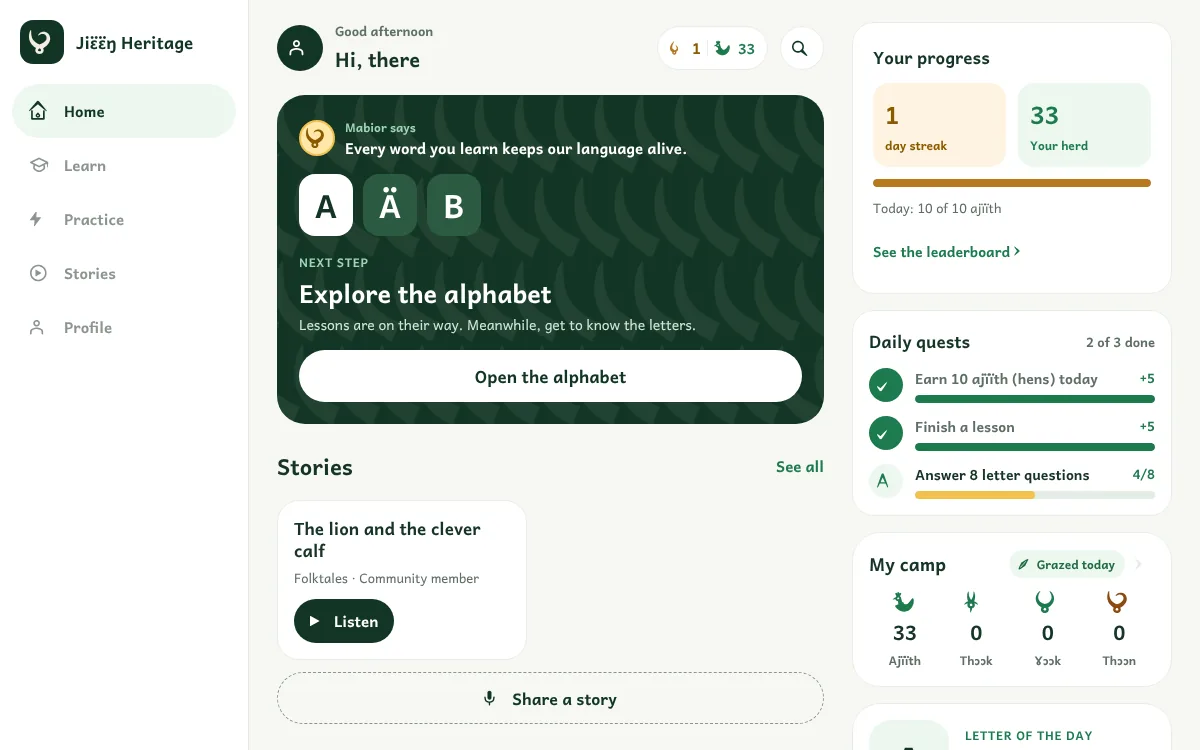
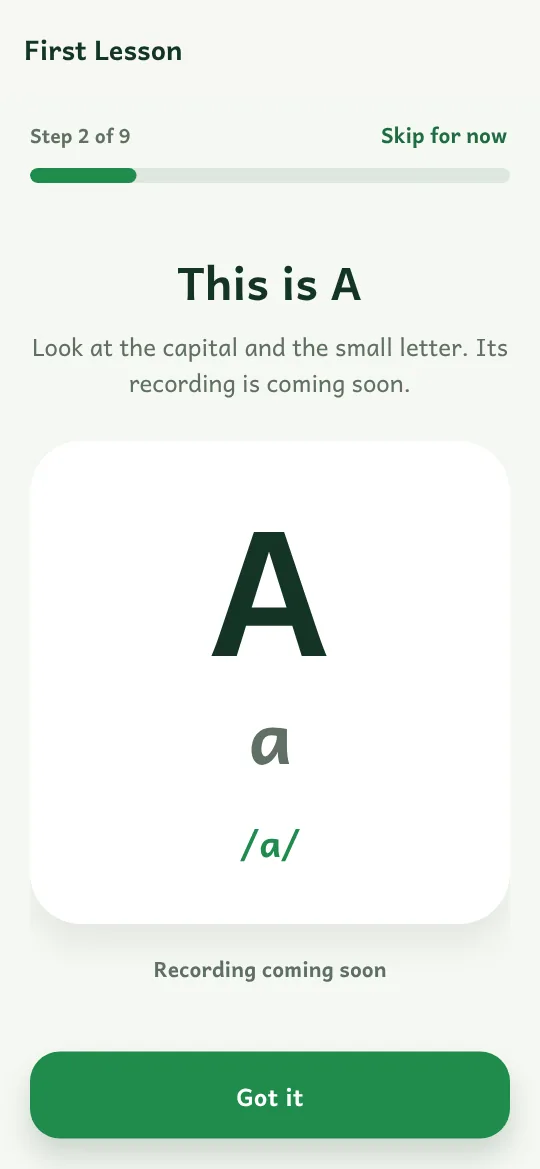
Short lessons teach the letters and everyday words: listen, match, type, and say each word yourself.
Listen to stories
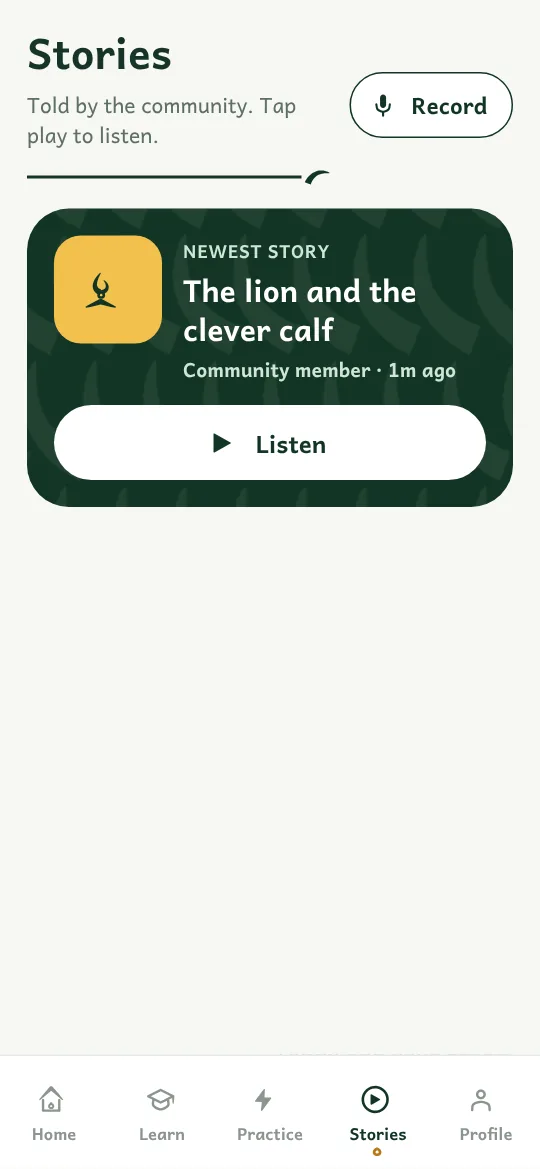
Play folktales, songs and proverbs told by the community, wherever you are.
Record an elder
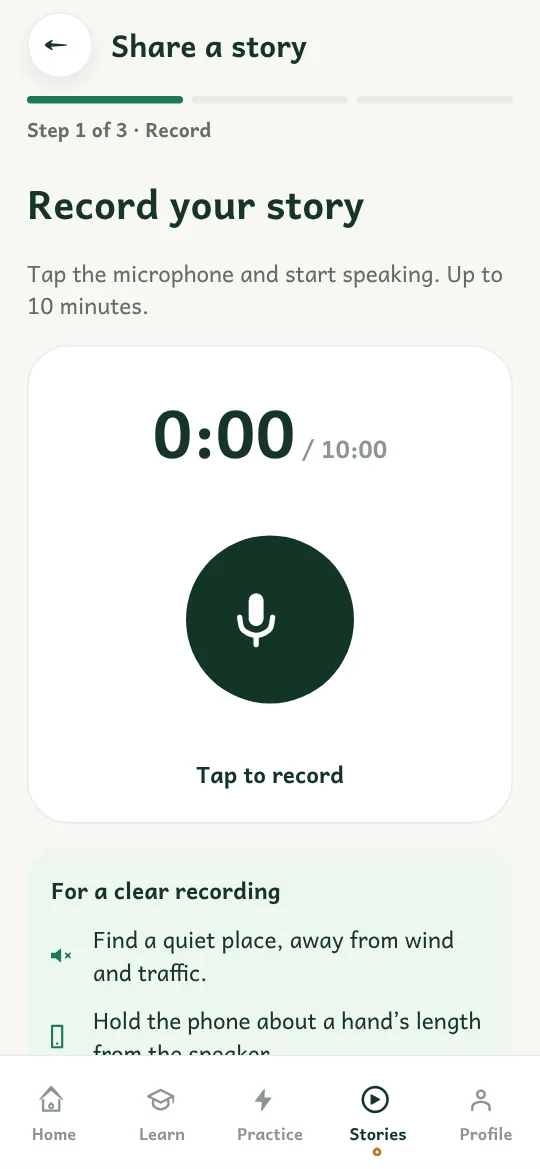
Record a story on your phone. A moderator checks it, then everyone can listen.
Learning feels like play
Small wins, every day.
A few minutes a day is enough. The app makes those minutes feel good, so you come back tomorrow.
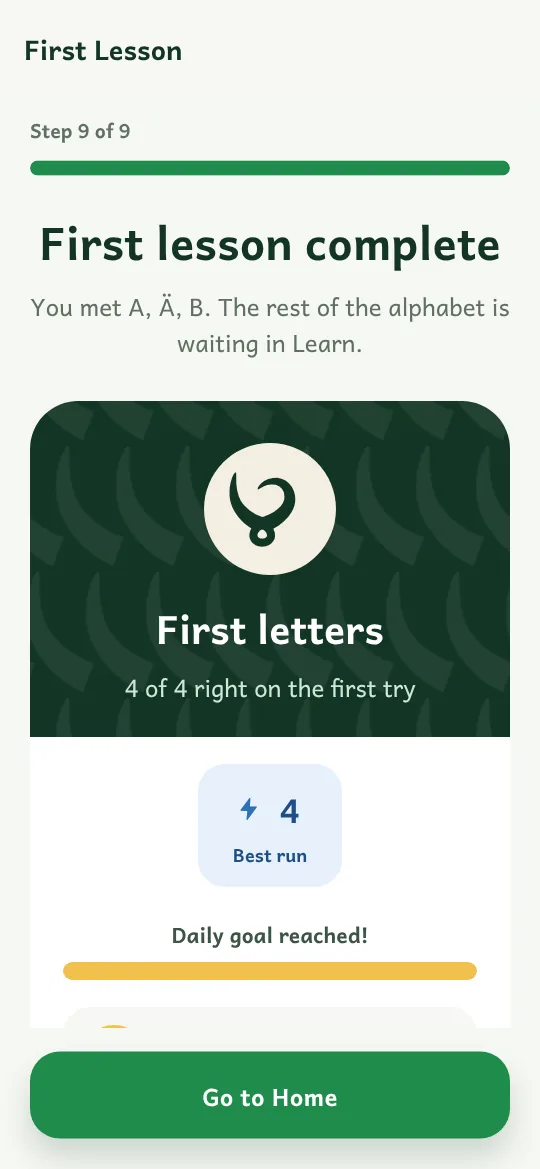
A celebration after every lesson
Cheerful sounds, a gentle buzz on phones and confetti at the end, with Mabior, the app's guide, cheering you on. Prefer it calm? Switch sounds and motion off in Settings.
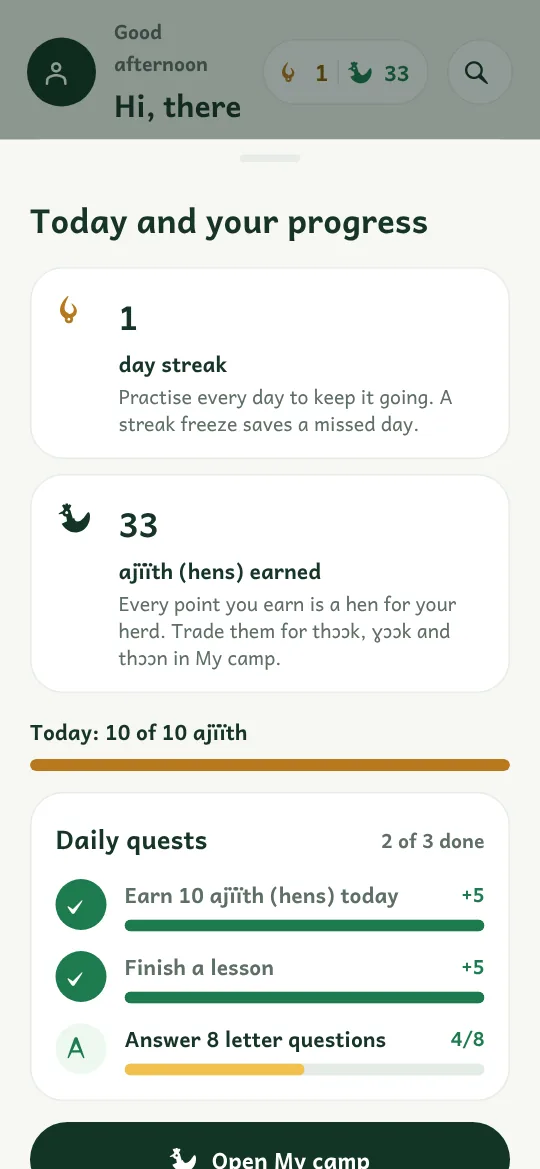
Daily quests and a proverb a day
Three small goals each day, badges with cattle-camp names, streak freezes that cover a missed day, and a different proverb on Home every day.
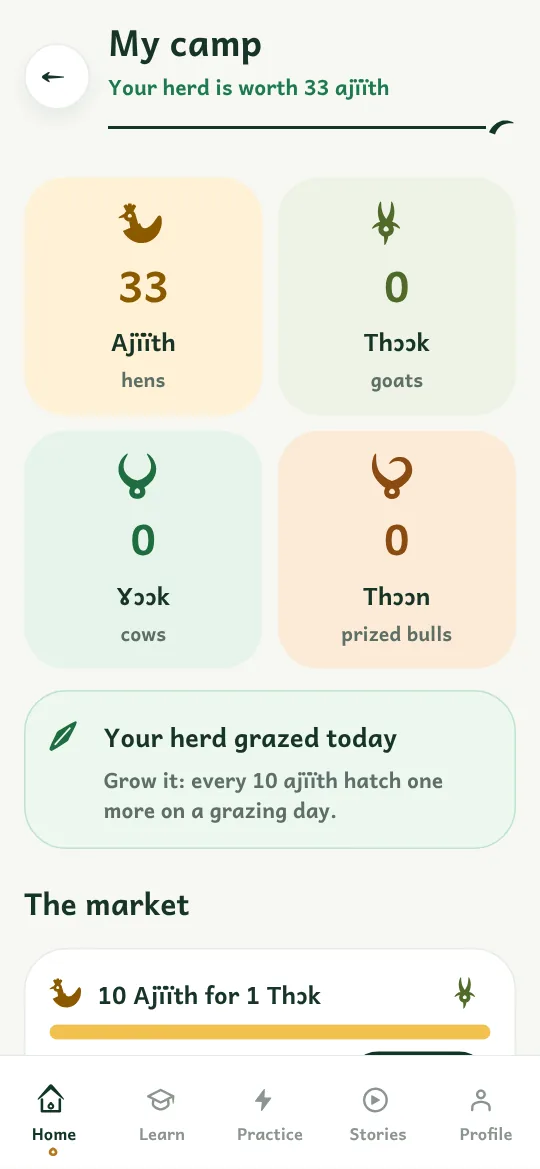
A herd that grows
Every point you earn is a hen. Trade hens for goats, goats for cows, and cows for prized bulls. Come back each day and your herd grazes and grows.
In the app today
Everything in one place.
Lessons and practice
Units of short lessons with tips: letters, words, matching, listening, typing, and saying words yourself to compare with a speaker.
Remembers what you find hard
Words you miss come back in quick reviews until you know them.
Story library
Folktales, songs, proverbs and names. Play from the list, like and comment, then answer a teacher's questions about what you heard.
Record and share
Three easy steps, a cover photo if you like, and consent before anything is shared. Fix the title or photo later.
Word rush and picture scenes
Match words to their meanings against a 60-second clock, or explore a picture and tap each thing to hear its word.
Share with family
Send a story link on WhatsApp or Facebook with its own cover. Anyone can listen, no app needed.
Made for slow connections
Works offline and sends your recordings when the connection comes back.
Your progress, everywhere
Sign in with Google or email and pick up on your phone or laptop.
Story videos Coming soon
Filmed stories with elders, with Jiɛ̈ɛ̈ŋ Heritage Plus. The audio stays free.
Shared with care
Respect for every voice.
Stories belong to the people who tell them. The app is built so they are shared only with permission.
- Everyone heard in a recording agrees before it is shared.
- Moderators listen to every story before it goes public.
- Anyone can report a story or comment, or block a member.
- Hurtful words in comments are caught, and the writer is asked to keep it kind.
- No ads and no trackers. We never sell your data.
- You can delete your account and your recordings at any time.
- Lessons and the app's wording are shaped by Thuɔŋjäŋ teachers.
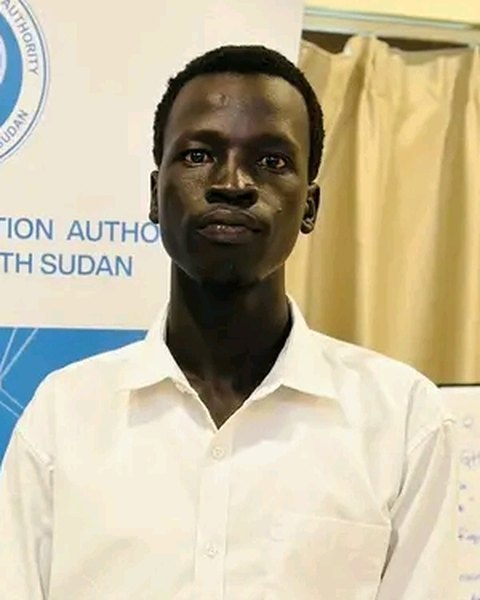
Why I built this
I grew up as a war child in South Sudan. When I visited relatives in Uganda, my aunt's children spoke English fluently, but they could not speak basic Thuɔŋjäŋ, even though they used phones every day.
Those same phones could help them learn their language and hear the stories of our elders. I study computer science at the University of Juba, and Jiɛ̈ɛ̈ŋ Heritage is how I am putting it to work for my community.
Makur MajengFounder, Jiɛ̈ɛ̈ŋ Heritage
What's next
Growing with the community.
The app
- Lessons, games and practice
- Daily quests and a growing herd
- Story library and sharing
- Recording with consent and moderation
12 months in Juba
- Train 10 to 20 secondary-school students to record
- At least 50 stories from elders
- Tested with 100 early users at home and abroad
More for everyone
- The app in Thuɔŋjäŋ
- Choosing your dialect, and the meanings of names
- Transcripts and translations
- Android and iPhone apps, story videos
Get involved
Every story counts.
Teach or record
Speak Thuɔŋjäŋ well? Help shape the lessons, record words, or review stories.
Get in touchPartner with us
Schools, community groups and organisations: help us reach more elders and learners.
Get in touchQuestions
Good to know.
Jiɛ̈ɛ̈ŋ, Jieeng, Jieng, Dinka: is it the same?
Yes. Jiɛ̈ɛ̈ŋ, also written Jieeng or Jieng, is what the Dinka people call themselves; Muonyjang is another name. Their language is Thuɔŋjäŋ, the Dinka language, and that is what the app teaches.
Is it free?
Yes. Lessons, practice and every story's audio are free. Story videos will come later with an optional Plus subscription.
Do I need the internet?
Only now and then. The app keeps what you have opened and sends your recordings and comments when you are back online.
Who can hear my recording?
Only you, until a moderator approves it. Then everyone can listen. You confirm that everyone in it agreed before you send it.
Which dialect does it teach?
The lessons start with the shared alphabet and everyday words. Choosing your dialect (Rek, Agar, Bor, Padang, Ruweng and the dialects within them) is coming soon.
What are the hens, goats and cows?
Your points in the app, counted as a herd, the way wealth is counted in a cattle camp. Every point is a hen; hens trade up to goats, goats to cows, and cows to prized bulls. They are earned by learning.
Is there an Android or iPhone app?
They are coming soon. Until then, the app works in your phone's browser: open it and add it to your home screen.
Can I delete my account?
Yes, at any time in Settings. See how in the privacy policy.
Get in touch
Write to us.
Questions, a story to share, or an idea for working together: we read every message.
Start with one word, or one story.
Free, on any phone. Join the people keeping Thuɔŋjäŋ alive.
Open the app